
A featured contribution from Leadership Perspectives, a curated forum for enterprise technology leaders, nominated by our subscribers and vetted by the CIOApplications Editorial Board.

The Kraft Heinz Company
Empowering and Directing IT and Business Teams to Achieve Business Objectives
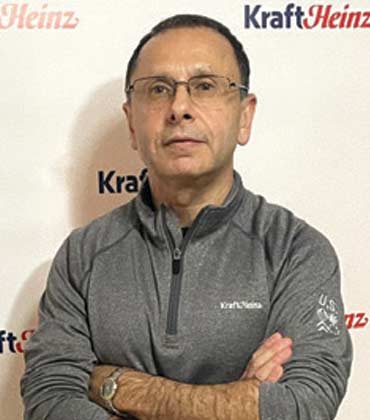
What are the responsibilities you fulfill as a digital manufacturing leader, and how does your typical day unfold?
As the leader of digital manufacturing, my primary focus lies in crafting and implementing the digital manufacturing strategy for our products, which aligns with the transformative objectives of Kraft Heinz North America. Our company is currently undergoing a digital manufacturing transformation across 32 plants in North America, covering various aspects of manufacturing and operations.
A typical day starts with planning sessions, where my team and I collaborate with the business to discuss the previous day's achievements and set goals for the current day to keep us on track. We adopt an agile approach to work, commonly known as "Agile at Scale," which involves sprint planning every two weeks and quarterly planning, also called program increment (PI) planning, every three months.
During the 12-week PI cycle, we conduct reviews of our PI objectives and key results with our North America and global leadership teams. Additionally, we ensure alignment with the business objectives for the next three months. This regular interaction with our leadership team and the business side helps us stay on course and maintain seamless coordination.
Have you observed any emerging technologies that are making an impact on our space?
As part of our digital transformation, we have been actively exploring and adopting newer technologies. We have established partnerships with IT firms, including Microsoft, to implement these technologies at Kraft Heinz. One such solution we have implemented is the Control Tower, which has proven to be effective.
Moreover, we are working on a digital twin pilot at some of our plants. This technology involves analytics and plant maintenance analytics to enable predictive maintenance, aiming to reduce unplanned downtime and enhance operational equipment efficiency. We are also focused on delivering value through the implementation of equipment insights and process indicators, which significantly contribute to the decision-making process. These endeavors aim to improve productivity, yield, and product quality.
Furthermore, we are exploring the potential of AI to troubleshoot issues and support production performance. The adoption of advanced analytics with high-speed digital cameras is also on our radar, allowing us to identify process abnormalities and enable timely corrections.
On the roadmap, we have plans for advanced process optimization and simulation, including scenario-based simulations to further enhance our manufacturing capabilities.
Could you talk more about the longstanding presence of machine learning in the manufacturing industry?
From a technological standpoint, machine learning plays a crucial role in our digital transformation journey. It all starts with collecting data from the shop floor, including process indicators. This data is then fed into our machine learning algorithms, which can effectively identify abnormalities as new data sets come in. When anomalies are detected, the algorithm communicates with the respective machine to initiate self-correction.
Digital Transformation Can be a Game Changer, and by Embracing it Wholeheartedly, You Position Your Company for Continued Growth and Competitiveness in The Ever-Evolving Manufacturing Landscape
For instance, if the temperature deviates abnormally from the standard process, the machine learning algorithm takes corrective action based on prior learning and adjusts the temperature accordingly. The true strength of machine learning lies in its ability to adapt. As more data accumulates, the machine identifies the relevant criteria, deltas, and thresholds to ensure the product's quality, yield, and overall outcome meet the desired standards. This self-adjusting capability allows us to consistently produce high-quality products.
So, by leveraging machine learning, we can effectively optimize processes, improve product quality, and ensure efficient operations throughout our digital transformation journey.
What would be your piece of advice to your peers?
My advice to my peers and other manufacturing companies would be to fearlessly embark on the digital transformation journey. When you take that leap, make sure to plan thoughtfully and initiate quick pilots to identify the value they bring. Don't be afraid of failure, as it serves as a valuable learning experience, allowing you to refine and improve your strategies.
Also, make sure that you have the right tools in place to collect your operational data and store it in a cloud database to facilitate contextualization and standardization across all processes. This enables seamless integration with analytics engines and self-learning algorithms, fostering standardized ways of working across the organization.
Consider adopting the agile methodology to scale effectively. Start with a quick MVP approach, validating its value before implementing it network-wide. Once the value is evident, go full throttle without hesitation, moving fast and with determination to achieve success. Remember, digital transformation can be a game changer, and by embracing it wholeheartedly, you position your company for continued growth and competitiveness in the ever evolving manufacturing landscape.

